Showing posts with label mixed fractions. Show all posts

Wednesday, November 17, 2010

Question 12

12. In the table, a positive number shows how many hours the time location in ahead of the time in London, England. A negative number shows how many hours the time is behind the time in London.


*First of all: remember that in adding and subtracting fractions, you must find a common denominator first (if needed).

a) How many hours is the time in St. John's ahead of the time in Brandon?

To find the answer, I subtracted the amount of time in Brandon from the amount of
time in St. Johns. A diagram below shows you how I solved it, and therefore the time in St. John's is 2 and 1/2 hours ahead of the time in Brandon.


b) How many hours is the time in Victoria behind the time in Mumbai?
The process in the same as the last question, I subtracted the time in Victoria from the one in Mumbai. Below, it shows that time in Victoria is 13 and a half hours behind from that of Mumbai.


c) Determine and interpret the time difference between Tokyo and Kathmandu.
Once again, I subtracted the two times of both places. The diagram below shows that Tokyo is 3 and 1/4 hours ahead of Kathmandu.

d) Determine and interpret the time difference between Chatham Islands and St. John's.
I subtracted the amount of time in Chatham Islands to that of St. John's. The diagram below will show that Chatham Islands is 16 and 1/4 hours ahead.


e) In which location is the time exactly halfway between the times in Istanbul and Alice Springs?
The time in Kathmandu, Nepal is halfway between times in the other two locations. How did I know that? Because I added the times in Istanbul and Alice Springs (refer to chart above) and then I divided their sum by 2 because we are finding the halfway point. (Half= 2)

Thank you for reading :)

Sunday, November 14, 2010

Jomari's Post November 14,2010

Question 21: Calculate the Following
A. 1/3(2/5 - 1/2) + 3/10
B. 3/4÷5/8 - 3/8 ÷ 1/2
C. 1 1/2 + 1 1/2 (-2 2/6 + 1/3)


A.)
1/3(2/5 - 1/2) + 3/10
1/3(4/10-5/10) + 3/10
1/3(-1/10) + 3/10
-1/30 + 3/10
-1/30 + 9/30
8/30
4/15

B.)
3/4÷5/8 - 3/8 ÷ 1/2
6/5 - 3/4
24/20-15/20
9/20

C.)
1 1/2 + 1 1/2 (-2 2/6 + 1/3)
1 1/2 + 1 1/2 (-2)
1 1/2 + -3
-2 1/2

When we do these questions, we just remember BEDMAS to do everything in order.
Please comment and tell me how to improve my post.

Kamille's Scribepost

HELLO, This is kind of late but anyway.. but we we're assigned a question to do and i had to do question 19 so let's get right to it.

QUESTION 19.


a) - 5 /4 b) 11/10 c) 16/13 d) - 3/2

Tuesday, November 9, 2010

Michelle's Scribepost for November 9,2010

Hey everyone! Today in class we were given questions from the textbook. I had to do question 6 from 2.3.

First you find the common denominator. Sometimes when you multiply both denominators you can find the common denominator, but that doesn't always work because you want the least common denominator. For example, in questions b), d), and e) If you multiplied both the denominators, the denominator would be a big number. So you have to find the least common multiple.

The next step is, whatever you do to the bottom (denominator), you do to the top (numerator).

*Refer to a) Think how many times does 3 go into 12? 4 times, so you have to multiply both the numerator and denominator by 4. (2 x 4 = 8) Also with the other fraction (3/4), you find how many times does 4 go into 12? 3 times, so you multiply the denominator and numerator by 3.

Then after you changed the fractions which are now equivalent fractions, (still referring to a) you minus (or add, depending on the question) the numerators. (8-9= -1) and keep the denominator the same.

In question e) there are mixed fractions. One way to change mixed fractions into improper fractions is by, multiplying the denominator by the whole number and adding the numerator to get the NEW numerator. Keep the denominator the same.

In question f) you can just take the whole numbers and fractions and separate them. First you do the whole numbers 1 + (-1) = 0. Then you do the fractions like you would normally do it.


Sorry if this doesn't really make sense, I tried to explain it. And sorry for lack of colours, it doesn't work.

Brayden's Post

We were assigned a question from the textbook to do on the blog.


My question was number 15 from page 69.


15) Predict the next three numbers

A) -1 1/2, - 7/8, - 1/4, 3/8, 1....

-1.5, - 0.875, -0.25, 0.375 , 1

B) 1 1/3, - 2/3, 1/3, - 1/6, 1/12.....


A) When I was looking at A I was looking for a pattern. I converted the fractions into decimals and noticed a pattern. Every number you are adding 0.625 to the previous number. That would make my next 3 answers 1 5/8 (1.625), 2 1/4 (2.25) and 2 7/8 (2.875).


B) When I was doing B I did it a bit differently from A. I was looking at the pattern and I noticed that you were dividing the numerators by 2 then when the numerator became 1 they started dividing the denominator by 2. The pattern started by dividing by -2 then 2 and so on.

Thursday, November 4, 2010

Sharmaine's Scribe Post for November 4, 2010

Hey everyone! We were given a question from the textbook. My question was...

12. Which value in each pair is greater?

To find out switch pair is greater you will need a method.
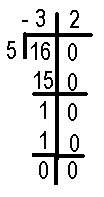
First you will need to divide the numerator and demoninator but without using a calulator. so for example. the image below shows 1 third over 3 thirds. So I divided it. 3 divided by 0.10. How I
got 0.10 is that 3 does not go into one so we added a zero. So how many times can 3 go into 10. ? it would be 3 times. Next you subtract 0.10 by 0.9 because 3 times 3 is 9. You are left with o.oo10 then you contiue again. If you continued you will notice that you've been mulitplying and subtracting the same numbers over and over again. This would mean it is a repreating decimal.
a) 1/3 is greater. Most people would say -2/3 but having that negative there changes the whole number. yes 0.66 repeating is greater but there is a negative sign infront so 0.33 repeating is greater because is it a positive.
b) 7/10 is greater because there is another negative sign infront of 0.9
c)-1/2 is greater because decimal numbers that a closes to zero are greater when they have a negative sign infront.
d)-2 1/8 is greater because for 2.125 you ignore the five, so you will see it as -2.12
so which is greater -0.12 or -0.25? It would be -0.12 because it is closer to zero.

13. which value in each pair is smaller?

a)4/7 is smaller. that is becasue rounded to the nearest tenths would be 0.60 and rounding 2/3 would be 0.67. So thats how you can tell which is smaller by rounding.

b)-5/3 is smaller because it is a negatavie number and it is more father away from zero in decimal form.
c) -7/10 is smaller because in decimal form it is further away from zero.

d) -1 4/5 is smaller since it is further away from zero in decimal form.
THANK YOU FOR READING MY BLOG. PLEASE LEAVE A COMMENT BEHIND AND PLEASE DO CORRECT ME IF I DID SOMETHING WRONG

Allysa's scribepost for November 4, 2010

We were all given a blog post again today. I was assigned question 22, on the unit 2.2. This question looked hard at first, but when you look at it again, its real simple and straight forward.

22. Replace each blank square with <, >, or = to make each statement true.


a) I started with converting my fractions into decimals.


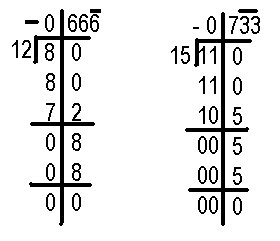
Now I know they're equal, because at the top, they have the same numbers. That is where you find your
decimal.


b) The other number is -0.6 (Repeating) as shown in the diagram at the top. -3/5 or -0.6 is greater because its a negative.


c) This one is pretty straight forward. -1 3/10 is equivalent to - (-13/-10) because they're both the same as saying -13/10 as an improper fraction.


d) The other number is -3.25. -3.25 is less than -3.2 because it is negative so the smaller number is larger.


e) This is a more complicated one. - 8/12 is larger. The reason why the decimal numbers are random is because for the first one, I divided 12 by 3 to get 4. Now you have to do that for the percentage. 100% divided by 3 is 33(repeating)%. Since you need 8, you multiply the 4 by 2. When you do that, you have to multiply the percentage by 2. You now should have 66(repeating)%.
**This applies to the next 2 questions also.**


f) I prefer converting it into an improper fraction. - 17/6 is greater because when I converted them into decimals, since it was negative, the smaller number was greater.
For the second conversion, instead of dividing the last number into 3, I divided it into 4. So, 8 divided by 4 is 2. 100% divided by 4 is 25%. 2 multiplied by 3 is 6. Therefore, 25% multiplied by 3 is 75%.


**NOTE: Don't let the negatives trick you. If it is a negative, the smaller number will always be greater. Also if one number in a fraction is a negative, the whole number is.**

Thank you for going through my blog. Please leave a comment behind, or any advice on what I did wrong.