Sunday, November 7, 2010

Connor's Blog Post for November 4th

Today in math class we were assigned a question from our textbook.


I had to do two questions #23 and #24 on page 62 section 2.2.


23. One week in October in Iqaluit, Nunavut, the daily high temperatures were -4.6 C, -0.5 C, 1.2 C, 2.3 C, -1.1 C, 1.5 C, and -3.0 C. What was the mean daily high temperature that week?


The way I got this was by adding up the temperatures then divided the sum by the the number 7(number of days) to get the average(mean) temperature.


-4.6 + -0.5 = -5.1


-5.1 + 1.2 = -3.9


-3.9 + 2.3 = -1.6


-1.6 + -1.1 = -2.7


-2.7 + 1.5 = -1.2


-1.2 + -3.0 = -4.2


-4.2 / 7 = -0.6


The average tempurature in Iqualit for that week was -0.6.


24.Copy and complete each statement.


A) _ + 1.8 = -3.5


The way to solve this is by using subtraction.


Take the answer of the equation and subtract the second addend.


-3.5 - 1.8 = ?


-3.5 - 1 = -4.5


-4.5 - 0.8 = -5.3


The blank in this equation is -5.3


B) -13.3 - _ = -8.9


The way to solve this is by using addition.


Take the answer and add it and the first addend together.


-13.3 + -8.9 = ?


An easy way to do this is by converting the two numbers too positive integers then subtracting and converting back.


13.3 - 8.9 = ?


13.3 - 8 = 5.3


5.3 - 0.9 = 4.4


4.4 = -4.4


The number that is needed to fill in the empty space is -4.4.


C) _ x (-4.5) = -9.45


The way to solve this is by using division.


Take the answer and divide it by the factor.


-9.45/-4.5 = ?


The answer that fills the blank is 2.1


D) -18.5/_ = 7.4

The way to solve this is by using using division.

Use the divedend and divided it by the divisor to get the number that fills the blank.

-18.5/7.4 = ?
The answer that fills the blank is 2.5.


Thank You for reading my Blog Post!!
Comment if you like and if there is anything wrong or that should be changed please notify me.

Thursday, November 4, 2010

Jamie's Blog Post for November 4, 2010

We were all assigned to do a blog on questions from the textbook and I got question 28 from 2.1.
Actually, I'm not too sure if Mr Backe assigned this question for me because it look me like 2 minutes to figure out.. But I'll do it anyways!

# 28: How many rational numbers are between 2/3 and 0.6 repeated? Explain.
Well, my answer would be none. That is because 2/3 and 0.6 repeated are equivalent.

Here, I'll show you different ways on how to answer this question.

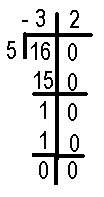
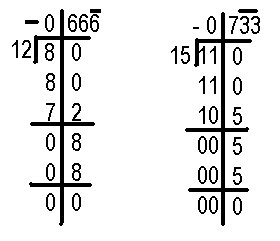
I used the long division to convert the 2/3 into a decimal.
Once it kept going on and on, I knew that it was a repeating decimal which is 0.6 repeated. And, 0.6 repeated = 0.6 repeated, so there are no rational numbers that go inbetween 2 of the same numbers.

THANK YOU for reading my post and have a nice day! :D Please comment to tell me what I did wrong.

PS: Backe, if you would like to give me another question I'd be happy to. :P I like a little bit of a challenge! hahahahaa :D

PSS: Colours aren't working :(

Elijah's Scribepost for November 4, 2010

My question was number 21 on Chapter 2.2.

21. The Table shows the average early-morning temperature for seven communities in May.


a) Write the temperatures in descending order.
Order:
6.1 (Petincton) ,
5.4 (Edmonton),
3.9 (Regina),
0.6(Whitehorse),
-0.1 (Yellowknife),
-5.1 (Churchill),
-14.1 (Resolute)

Descending means that the numbers are ordered from greatest to least. Now obviously, the numbers with the negatives would be on the least side and the numbers that are positive would be on the greater side.

b) Which Community has an average temperature between the values for Whitehorse and Churchill ?
Answer: Yellowknife

Whitehorse, Yukon's temperature is 0.6. Churchill, Manitoba's temperature is -5.1.
Out of all the Communities, Yellowknife is the one between Churchill and Whitehorse. Look at letter a's answer, and you'll see the 0.6 (Whitehorse) , -0.1 (Yellowknife), -5.1 (Churchill).

Elaine's Scribe Post for November 3, 2010

Hey everyone!!! Well in class, we were all assigned questions to do on the blog and I got 14 & 15

14. Identify a decimal number between each of the following pairs of rationa
l numbers.
- to answer these questions, first, I converted each p
air into decimal form and t
hen found a decimal number that is in between the two numbers.

Here is how I answered 14. a):


These are the answers that I got from the other questions :


And remeber! To get the decimals in between the pair of numbers, make sure that the decimal place value isn't greater than
the largest decimal of the pair or less that the smallest decimal of the pair.
-------------------------------------------------------------------------------------------------


15. What is a decimal number between each of the following pairs of rational numbers?

- to get to the answer, it is basically, the same steps as question 14, but an extra step is added, you have to convert the mixed numbers into improper fractions, then into decimals.

Here are the steps to how I got my answer for a):


All my other answers are:


Thanks for reading my scribe!!!! Sorry if the pictures are too small, and tell me in the comment box if I made any mistakes :)

Sharmaine's Scribe Post for November 4, 2010

Hey everyone! We were given a question from the textbook. My question was...

12. Which value in each pair is greater?

To find out switch pair is greater you will need a method.
First you will need to divide the numerator and demoninator but without using a calulator. so for example. the image below shows 1 third over 3 thirds. So I divided it. 3 divided by 0.10. How I
got 0.10 is that 3 does not go into one so we added a zero. So how many times can 3 go into 10. ? it would be 3 times. Next you subtract 0.10 by 0.9 because 3 times 3 is 9. You are left with o.oo10 then you contiue again. If you continued you will notice that you've been mulitplying and subtracting the same numbers over and over again. This would mean it is a repreating decimal.
a) 1/3 is greater. Most people would say -2/3 but having that negative there changes the whole number. yes 0.66 repeating is greater but there is a negative sign infront so 0.33 repeating is greater because is it a positive.
b) 7/10 is greater because there is another negative sign infront of 0.9
c)-1/2 is greater because decimal numbers that a closes to zero are greater when they have a negative sign infront.
d)-2 1/8 is greater because for 2.125 you ignore the five, so you will see it as -2.12
so which is greater -0.12 or -0.25? It would be -0.12 because it is closer to zero.

13. which value in each pair is smaller?

a)4/7 is smaller. that is becasue rounded to the nearest tenths would be 0.60 and rounding 2/3 would be 0.67. So thats how you can tell which is smaller by rounding.

b)-5/3 is smaller because it is a negatavie number and it is more father away from zero in decimal form.
c) -7/10 is smaller because in decimal form it is further away from zero.

d) -1 4/5 is smaller since it is further away from zero in decimal form.
THANK YOU FOR READING MY BLOG. PLEASE LEAVE A COMMENT BEHIND AND PLEASE DO CORRECT ME IF I DID SOMETHING WRONG

Binesi's Scribepost for November 4th 2010

A pelican dives vertically from a height of 3.8 m above the water. It then catches a fish 2.3 m underwater.

a) Write an expression using rational numbers to represent the length of the pelican's dive

b) How long is the pelican's dive?


a) Your equation using rational numbers is going to represent an integer or a fraction because it says to use rational numbers.

The book wants to know how far the pelican dived, so you have to subtract a negative integer to make it seem like its adding (kind of).

3.8 - (-2.3) = 6.1 m

b) see above.

The pelican dove 6.1 meters to get the fish.

Allysa's scribepost for November 4, 2010

We were all given a blog post again today. I was assigned question 22, on the unit 2.2. This question looked hard at first, but when you look at it again, its real simple and straight forward.

22. Replace each blank square with <, >, or = to make each statement true.


a) I started with converting my fractions into decimals.


Now I know they're equal, because at the top, they have the same numbers. That is where you find your
decimal.


b) The other number is -0.6 (Repeating) as shown in the diagram at the top. -3/5 or -0.6 is greater because its a negative.


c) This one is pretty straight forward. -1 3/10 is equivalent to - (-13/-10) because they're both the same as saying -13/10 as an improper fraction.


d) The other number is -3.25. -3.25 is less than -3.2 because it is negative so the smaller number is larger.


e) This is a more complicated one. - 8/12 is larger. The reason why the decimal numbers are random is because for the first one, I divided 12 by 3 to get 4. Now you have to do that for the percentage. 100% divided by 3 is 33(repeating)%. Since you need 8, you multiply the 4 by 2. When you do that, you have to multiply the percentage by 2. You now should have 66(repeating)%.
**This applies to the next 2 questions also.**


f) I prefer converting it into an improper fraction. - 17/6 is greater because when I converted them into decimals, since it was negative, the smaller number was greater.
For the second conversion, instead of dividing the last number into 3, I divided it into 4. So, 8 divided by 4 is 2. 100% divided by 4 is 25%. 2 multiplied by 3 is 6. Therefore, 25% multiplied by 3 is 75%.


**NOTE: Don't let the negatives trick you. If it is a negative, the smaller number will always be greater. Also if one number in a fraction is a negative, the whole number is.**

Thank you for going through my blog. Please leave a comment behind, or any advice on what I did wrong.